Engineering / 8 min read
How to publish security and privacy controls without turning trust into marketing theatre
A practical method for connecting public trust claims to implementation evidence, known boundaries, upstream tools, and honest release gates.
Write the control before the promise
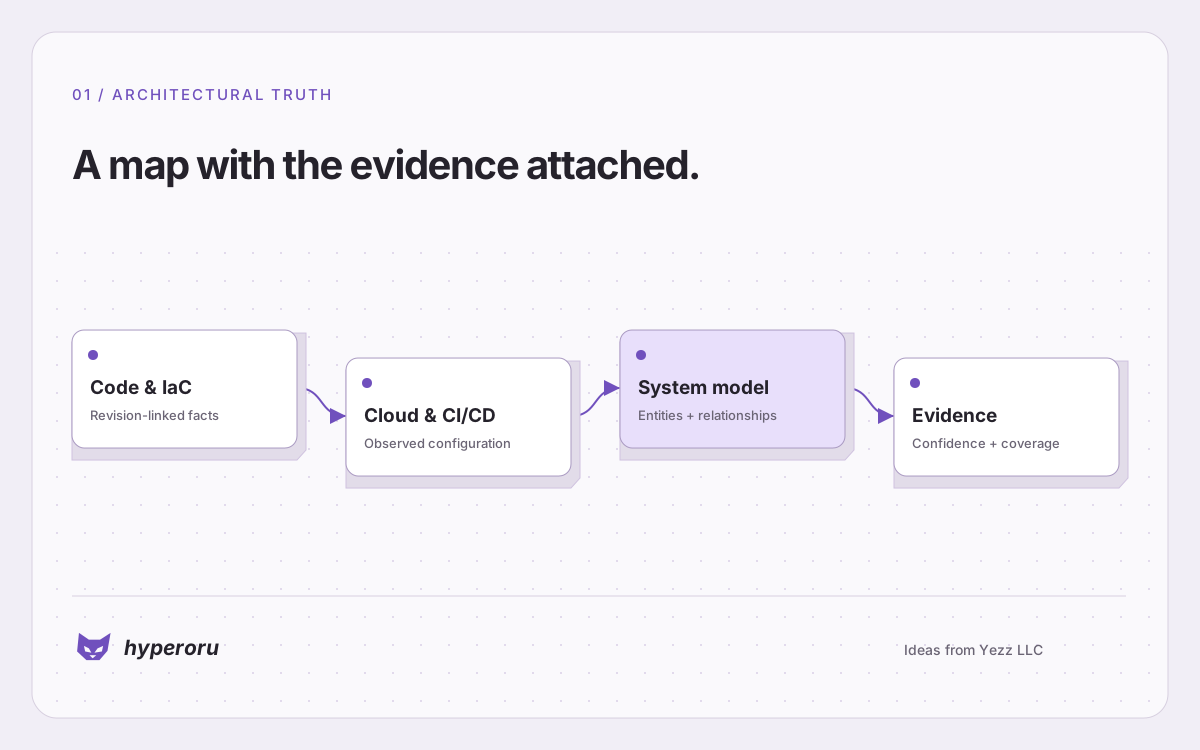
Public trust copy often begins with a confident adjective and works backward. A stronger method begins with the implemented control. Describe what it protects, where it is enforced, which evidence demonstrates that behavior, and which risk remains outside its boundary.
For example, encrypted storage is not one claim. Transport encryption, object-store encryption, application envelope encryption, key custody, rotation, restore behavior, and deletion are different controls. Buyers should be able to ask which layer protects which data class.
Separate product behavior from certification
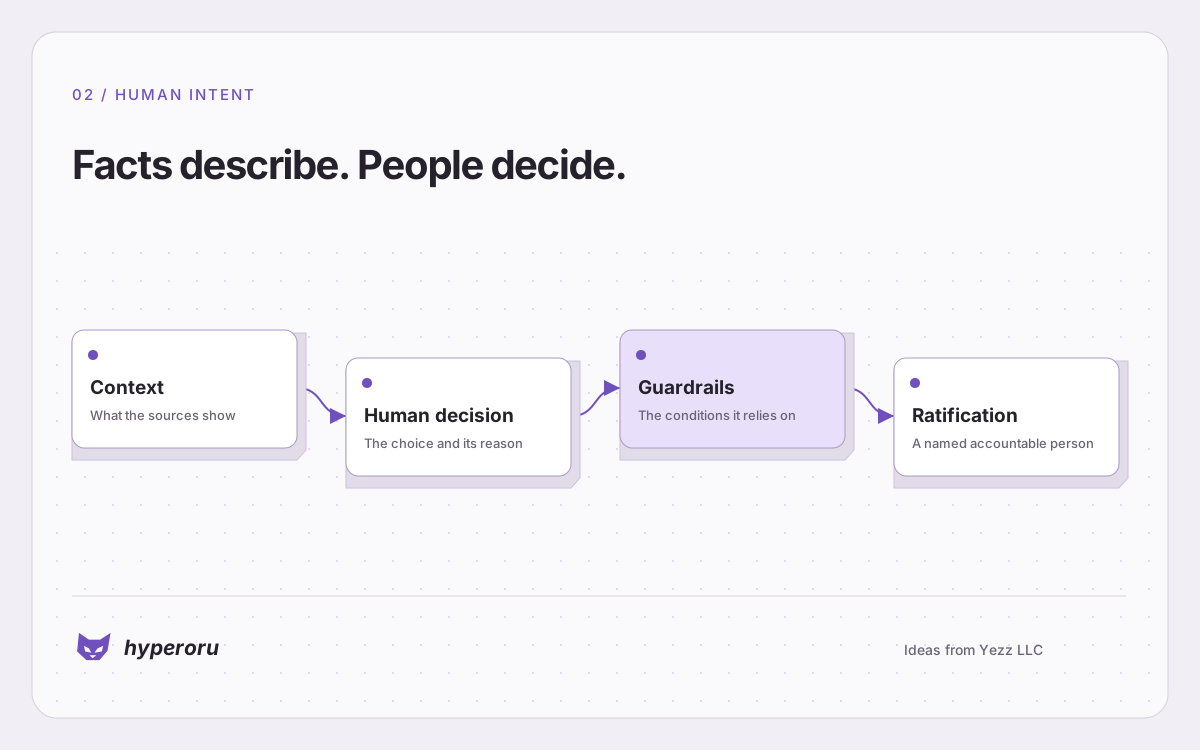
A product can implement useful controls before it has completed an external certification or attestation. Mixing those ideas creates legal and operational risk. Publish current implementation as current implementation. Publish an independent assessment only after the assessor, scope, period, and result can be named.
The same discipline applies to compliance reports generated by software. A report can map evidence to a requirement and show supported, partial, gap, not applicable, or unknown. It cannot turn missing evidence into a certification badge.
The honest state of an unfinished control is a release gate, not a softer synonym for complete.
Treat AI data handling as a configuration question
Provider documentation describes available retention behavior. The running configuration decides which behavior the product actually uses. A useful privacy page therefore names both: the provider policy reference and the request-level controls, retention mode, logging rules, cache policy, and artifacts the product persists.
Hyperoru selects bounded evidence, sends provider-pinned model requests with store disabled, and uses metadata-only gateway retention. It retains final structured artifacts and measured usage rather than hidden reasoning or unrestricted tool transcripts. Those statements should continue to be verified against code and deployment settings.
Publish upstream tools and licenses precisely
A security platform may rely on excellent open-source scanners while its own product rights are governed separately. List the exact tool, pinned version, evidence role, and upstream license. Link to the upstream license rather than compressing several legal relationships into an unclear open-source claim.
Version and digest serve different purposes. A version helps a reviewer understand behavior and advisories. A digest proves which image the runner resolved. The deployment lockfile should remain the authority for the executed artifact.
- Name the tool and its evidence role.
- Expose the pinned version and retain the image digest internally.
- Link the upstream license and preserve required notices.
- Keep product terms separate from third-party attribution.
Turn trust into an operating review
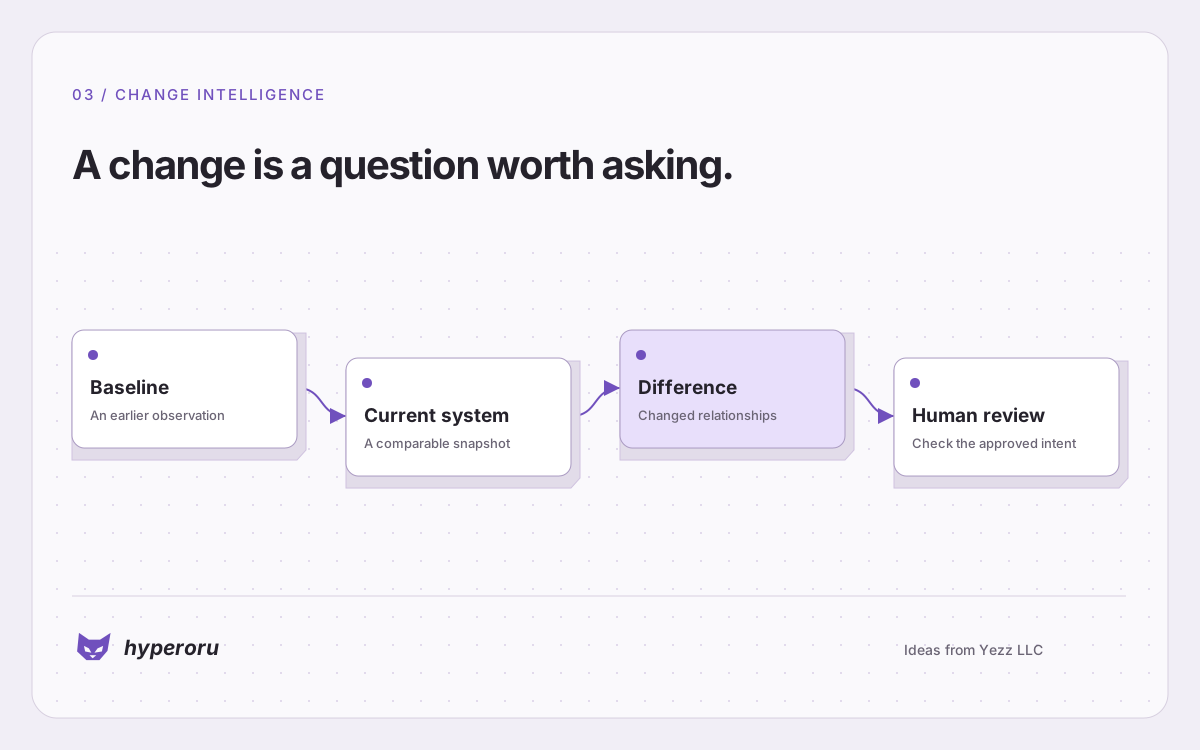
A trust page should change when the system changes. Review it when a provider, data class, storage layer, scanner, region, worker privilege, telemetry field, or deletion workflow changes. Accepted risks need owners and expiry conditions, not permanent footnotes.
The result is less theatrical and more useful. Buyers can evaluate the current boundary. Engineers can find the implementation evidence. Legal teams can distinguish product behavior from contractual commitments. Product teams get a visible reason to close the next release gate.
Read further
 Yasser TahiriCEO, Hyperoru
Yasser writes about building understandable software, connecting architectural evidence, and keeping people accountable for the decisions that shape a system.
About the company