Change / 2 min read
What architecture drift can tell you—and what it needs first
Compare architecture over time without confusing change with failure. Use dated snapshots, comparable coverage, and human intent to review drift.
First establish a baseline
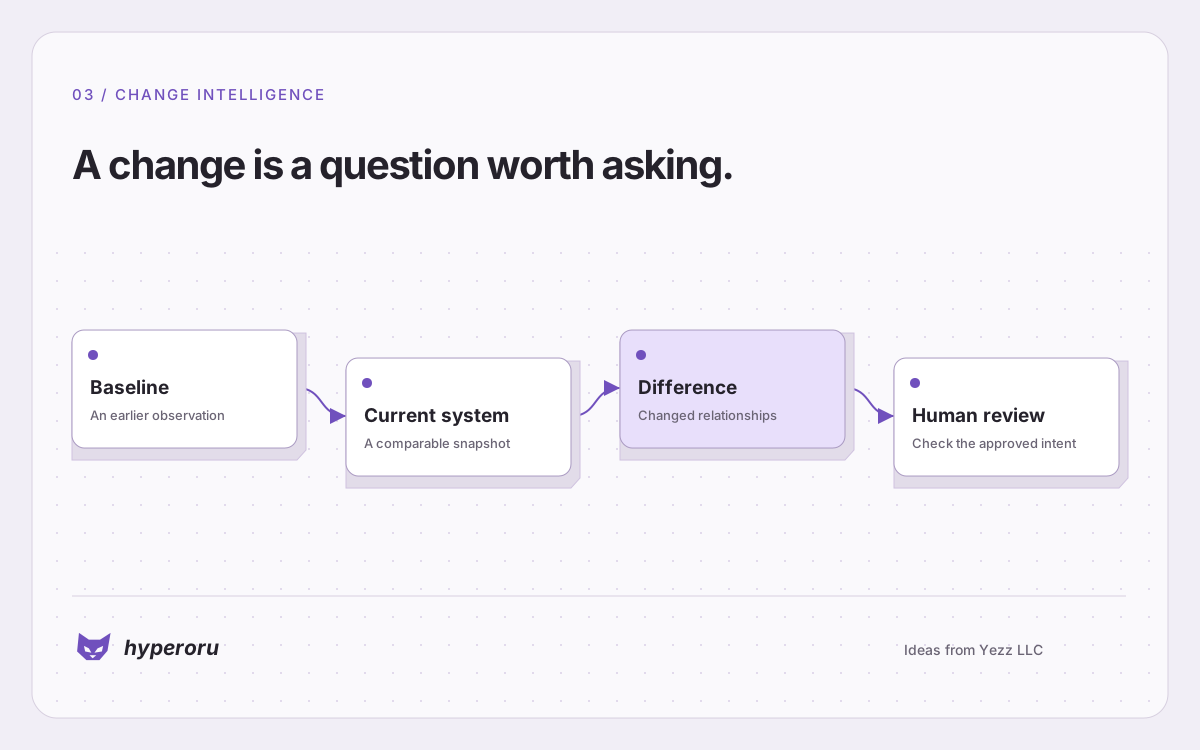
A single review describes one observed state. It cannot show how a system changed over time. Start by recording a successful architecture snapshot with its source revision, observation dates, and coverage.
The next comparison needs another suitable snapshot of the same repository. A different source bundle or a newly connected cloud account may change what is visible without proving that the underlying system changed in the same way.
Read the difference before the label
Inspect the entities and relationships that were added, removed, or changed. Open the underlying observations on both sides. A direct route to an API, a missing database connection, and a new deployment target represent different changes with different consequences.
Check whether the source coverage is comparable. If a source disappeared or an observation became stale, the honest next step may be to collect better evidence before judging the architecture.
Compare against a recorded decision
A new relationship is not automatically a failure. It might implement an approved design, expose an unintended path, or require an owner to explain a new choice. The intent record provides the decision and guardrails needed to distinguish these cases.
In the gateway example, a newly observed public path to the API challenges the condition that every request passes through the gateway. The claim should carry the two observations, the changed relationship, and the decision it affects.
Leave the review with a specific next step
Give the change an accountable owner. Decide whether to collect missing evidence, remove an unintended path, or propose a revision to the intended architecture. Preserve that reasoning alongside the comparison so the next review starts with context.
- Use a comparable baseline and current snapshot.
- Inspect the changed relationship and both sets of evidence.
- Check the approved guardrail and any coverage gaps.
- Record the decision before treating the review as resolved.
Read further
 Yasser TahiriCEO, Hyperoru
Yasser writes about building understandable software, connecting architectural evidence, and keeping people accountable for the decisions that shape a system.
About the company